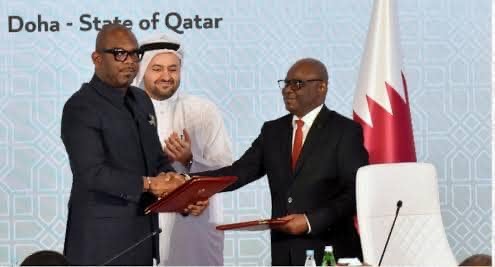
The AFC/M23 movement has issued a strong warning to national and international audiences, confirming that the Congolese government has deliberately violated the ceasefire agreed upon in the Doha Declaration of Principles, signed on July 19.
While negotiations continue in Doha under the pretext of peace, the Kinshasa regime is concurrently intensifying military operations on the ground actively pushing eastern Democratic Republic of Congo (DRC) closer to a renewed, full-scale conflict.
According to AFC/M23’s August 11 statement, large-scale troop deployments and military build-ups have been observed across multiple locations in North and South Kivu, including Nzimbira, Mwenga, Pinga, Kibuwa, Bunyakiri, and Uvira. The arrival of over 1,100 Congolese army coalition fighters by boat in Uvira on August 10 confirms the scale and coordination of these preparations.
These military movements are accompanied by systematic attacks on densely populated areas, resulting in civilian casualties and mass displacement, thereby intensifying an already unprecedented humanitarian crisis. This is part of a deliberate strategy by Kinshasa regime to provoke panic, forcibly dislodge local populations, and discredit the AFC/M23 movement in the international arena.
These actions are not isolated. They are part of broader, coordinated offensives designed during a series of high-level military meetings held between July 11 and mid-August in Walikale. The meetings brought together commanders from the Congolese army (FARDC), Wazalendo militia, and the genocidal FDLR group. Their agenda was clear, prepare large-scale joint operations against AFC/M23.
Senior FARDC officers leading operations along the Walikale–Masisi and Walikale–Hombo axes called for strengthened collaboration with the FDLR’s special operations unit, aiming to expand insurgent activity across North and South Kivu.
As a result, hostilities have escalated sharply since July 14, with active combat reported in Masisi, Kalehe, Rutshuru, and Kabare territories. One of the most recent and severe clashes occurred on August 4, when fighting broke out in Kalembe (Masisi) between Wazalendo militias and AFC/M23 forces. Local accounts confirm that dozens of civilians were killed, many injured, and widespread looting followed, all of which constitute direct violations of the Doha agreement.
Parallel to military escalation, Kinshasa is actively waging a disinformation campaign designed to shift international attention away from its ceasefire violations.
In early August, allegations emerged that AFC/M23 was responsible for massacring hundreds of civilians in Rutshuru, these were quickly echoed by select Western media outlets, notably Reuters, citing unnamed UN sources.
However, these accusations are not based on any independent investigation, verified testimony, or accounts from victims’ families. Instead, the entire narrative hinges on information reportedly provided by a single, unnamed “local activist”, asource whose credibility cannot be verified.
This narrative was strategically amplified to provoke international outrage and distract from the Congolese government’s growing military operations, a tactic consistent with previous efforts to shield Kinshasa from scrutiny, particularly its deepening collaboration with illegal militias and its responsibility for the ongoing humanitarian crisis.
The timing of these allegations is telling, they began circulating just as Kinshasa was intensifying troop deployments and launching coordinated offensives. By casting AFC/M23 as the aggressor, Kinshasa seeks to frame its own actions as defensive while in fact orchestrating the very conditions for renewed warfare.
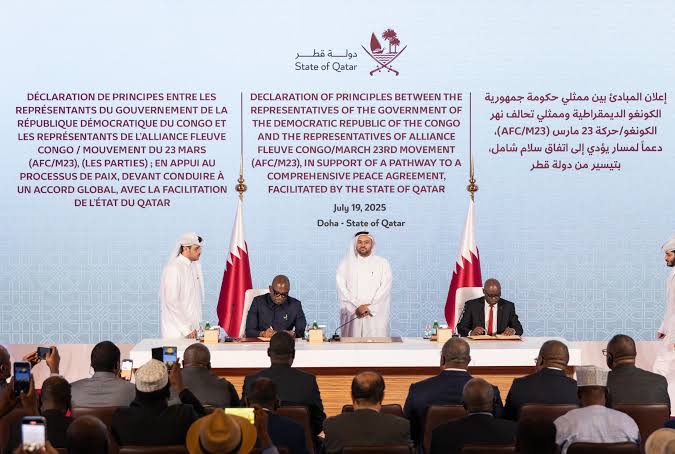
The Doha Declaration of Principles, signed by both AFC/M23 and the Congolese government on July 19, was intended to de-escalate the conflict through a mutual ceasefire, demilitarization, and humanitarian guarantees.
AFC/M23 has consistently adhered to the agreement by maintaining a defensive posture, avoiding offensive actions, and upholding civilian protections. As a gesture of good faith, the movement has also released thousands of prisoners, including more than 1,400 Congolese soldiers, under the oversight of the International Committee of the Red Cross (ICRC). Reports confirm that 3,000 European mercenaries and over 3,000 SADC (SAMIDRC) troops were also freed from areas under AFC/M23 control.
Kinshasa, on the other hand, has refused to reciprocate, violating the commitment to release captured AFC/M23 members, and in doing so, undermining one of the key confidence-building measures of the agreement.
This pattern makes it clear that Kinshasa does not intend to engage in peace with sincerity
Instead, it has left no stone unturned in attempting to provoke AFC/M23 into a reaction, both politically and militarily. The aim is to create a pretext and a false justification for renewed government offensives under the guise of self-defense.
Kinshasa’s refusal to honor its commitments in Doha raises serious doubts about its willingness to pursue peace. Its continued reliance on militarization in defiance of both regional and international calls for de-escalation has only served to fuel instability, drive displacement, and threaten broader regional security.
A genuine implementation of the signed agreements is urgently needed. If Kinshasa continues on its current path, it will not only dismantle the Doha framework but also plunge the entire region into deeper and potentially irreversible crisis.
Redaction
About The Author